
SALINAS, Calif. — A Flock automated license plate reader gave California investigators a critical lead in the death of a newborn baby, helping them identify a vehicle linked to a 14-year-old girl and her biological father, who authorities say is wanted on suspicion of incest.
The investigation began August 1 after firefighters responded to a remote area near Highway 1 and Struve Road north of Moss Landing, where a newborn was found dead.
The baby, identified by authorities as Angelito, was found with the umbilical cord still attached. A post-mortem examination later found signs of traumatic injury, according to authorities.
Investigators determined that the baby had been born alongside the road to a 14-year-old girl, who authorities accuse of leaving the newborn on the ground.
The girl is also facing a murder warrant, although authorities have not publicly detailed how they determined her alleged involvement in the baby’s death.
Flock Camera Provides Vital Lead
The investigation took a major turn when detectives used a Flock automated license plate reader to identify a vehicle of interest, according to the Monterey County Sheriff’s Office.
Sheriff’s spokesperson Eric Bixler said the information obtained from the camera was critical to the investigation.
“I can say without that information we received from that camera, we may have never solved that case,” Bixler said, as first reported by the New York Post on Tuesday, September 1.

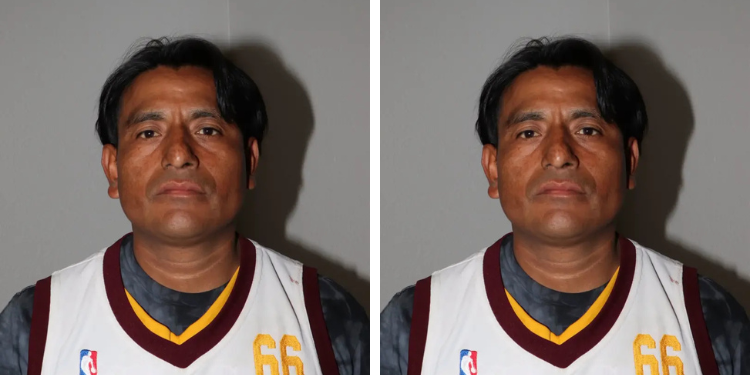
Investigators determined that the vehicle was registered to Sergio Galves Perez and his wife, Ofelia Garcia Ortega. Authorities later located the vehicle.
Ortega, 36, was arrested and charged with child endangerment before being released on bail.
Sheriff Tina Nieto said Perez is the biological father of both the teenage girl and the newborn.
Perez, 38, is wanted on allegations including incest, lewd or s*xual acts involving a child, unlawful s*xual intercourse, child concealment and child endangerment. He has not been reported arrested in connection with the case.
Teen Girl Described as Victim
Authorities are still examining what happened to the teenager and the circumstances surrounding her pregnancy and the baby’s death.
Despite the murder warrant against her, Nieto has described the girl as a victim and warned that she could be in danger.
Authorities have urged the public not to approach Perez if they see him and instead to contact law enforcement.
The sheriff’s office is seeking additional information that could help establish what happened before and after the baby’s death.
The circumstances surrounding the newborn’s traumatic injuries and the teenager’s alleged role in the death are also under investigation.
Flock Cameras Face Growing Backlash
The investigative breakthrough in California comes as Flock cameras face a growing backlash across the country, with critics questioning how much surveillance communities should accept in exchange for a law enforcement tool.
Flock has more than 120,000 cameras across the United States, according to the company. The systems capture license plates and other vehicle information, creating records that can help investigators determine where a vehicle has traveled.
That reach has fueled concerns among privacy advocates and residents who argue that people can effectively be tracked as they move around their communities, even when they have not been accused of a crime.
The opposition has increasingly moved beyond public criticism. Flock cameras have been vandalized, cut down, and otherwise damaged in communities around the country. The Washington Post reported that cameras have been shot, spray-painted, and dismantled as anger over surveillance has grown.
404 Media has also reported on efforts to physically disable the cameras and on law enforcement monitoring of social media accounts associated with the anti-Flock movement.
Government intelligence bulletins obtained by the outlet warned police about online discussion of ways to destroy Flock cameras and advised agencies to increase patrols around automated license plate readers.
The backlash has further prompted some communities to reconsider their contracts. Dallas police, for example, plan to deactivate 321 of the city’s more than 600 Flock cameras while keeping hundreds of others for investigative purposes.
Florida officials have also taken action against the use of Flock and other automated license plate readers on state highway rights-of-way, pointing to concerns about misuse and privacy.
Florida’s Department of Transportation said it will stop issuing permits for any future license plate reader system requests within its jurisdiction.
Critics have also pointed to cases of alleged misuse by law enforcement officers, adding to concerns about who can search the databases and what happens to the information collected.
Flock has responded by introducing additional privacy and accountability measures, including requiring a criminal case number for database searches, shorter data retention, and other controls intended to limit misuse.
The debate puts the California case in a complicated light. Here, investigators say a Flock camera gave them information that may have been critical to identifying a vehicle connected to a newborn’s death.
Across the country, however, residents and privacy advocates are questioning whether the same surveillance technology has become too pervasive.