

WASHINGTON — President Donald Trump has abandoned his proposal to charge a 20% fee on ships using the Strait of Hormuz, saying the United States will instead recover the costs of securing the strategic waterway through trade and investment agreements with Gulf nations.
The Tuesday, July 14 announcement is a reversal of the position Trump outlined just a day earlier, when he suggested that commercial vessels should pay the United States to keep one of the world’s busiest maritime routes open during heightened tensions with Iran.
Trump Replaces Shipping Fee With Investment Plan
In a post on Truth Social, Trump said discussions with leaders from the Gulf region prompted him to change course.
“Based on highly productive conversations with Middle East leadership, I have decided to replace the 20% United States Reimbursement Fee with Trade and Investment Deals that the various Gulf States will be making into the United States,” Trump wrote.
He did not identify the countries involved or provide details about the proposed agreements. The White House has also not released information about the size or timeline of the expected investments.
Trump argued that the new approach would benefit the United States without requiring commercial shipping companies to pay a direct fee to transit the Strait of Hormuz.
The president also claimed oil shipments through the waterway had resumed at high levels following recent U.S. military operations in the region.
Proposal Triggered Questions Across the Gulf
Trump’s original proposal to impose a 20% reimbursement fee surprised governments across the Gulf, according to reports.
Officials from several Gulf states reportedly contacted the White House seeking clarification after the president announced the idea.
The proposal also drew legal questions because international maritime rules generally guarantee freedom of navigation through international waterways such as the Strait of Hormuz.
Some observers argued that introducing a U.S.-imposed transit fee could strengthen Iran’s long-standing argument that vessels should pay to use the strategic shipping lane.
Trump’s latest announcement effectively removes that issue from immediate discussion, replacing it with a major economic strategy centered on foreign investment.
Gulf States Already Pledged Trillions
The president’s new plan builds on investment commitments that several Gulf nations had already made before the latest escalation in regional tensions.
Saudi Arabia, Qatar, the United Arab Emirates and Bahrain have collectively pledged more than $2 trillion in investments across the United States over the coming years.
Trump said the new agreements being discussed would push that figure even higher.
He, however, did not indicate whether those investments would be tied specifically to security operations in the Persian Gulf or represent separate economic commitments.
Strait of Hormuz Remains at Center of Regional Crisis
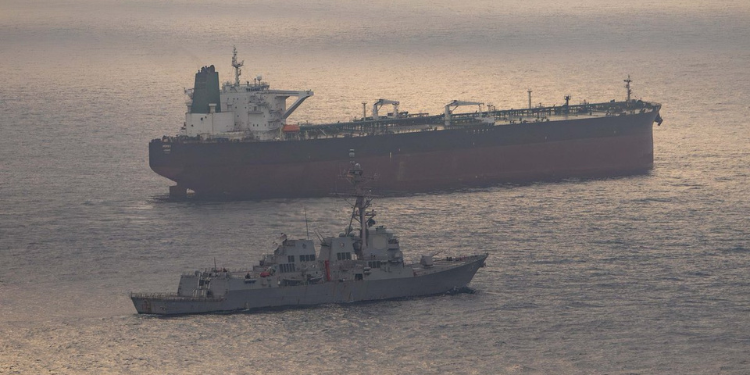
The policy shift comes as military tensions between the United States and Iran continue around the Strait of Hormuz.
The narrow waterway links the Persian Gulf with the Gulf of Oman and carries roughly one-fifth of the world’s traded oil, making it one of the most strategically important shipping routes anywhere in the world.
Commercial shipping has faced repeated disruptions in recent weeks following exchanges of fire involving Iranian forces and the U.S. military.
Trump claimed in his Truth Social post that the route remains open to international shipping because of American military operations.
“The Strait of Hormuz is open to ALL Ship traffic except for Iran, and that is because of their lying, violent, malicious leadership, which is taking them down the path of TOTAL DESTRUCTION,” he wrote.
The United States has expanded its military presence around the waterway while increasing economic pressure on Tehran.
Recent measures have included tighter sanctions targeting Iranian financial networks and the removal of sanctions waivers that had allowed some Iranian oil sales.
Iran has criticized those actions, arguing they violate understandings reached during earlier negotiations.
Despite the renewed military confrontation, diplomatic contacts have been happening through Oman, which has served as a mediator between Washington and Tehran.