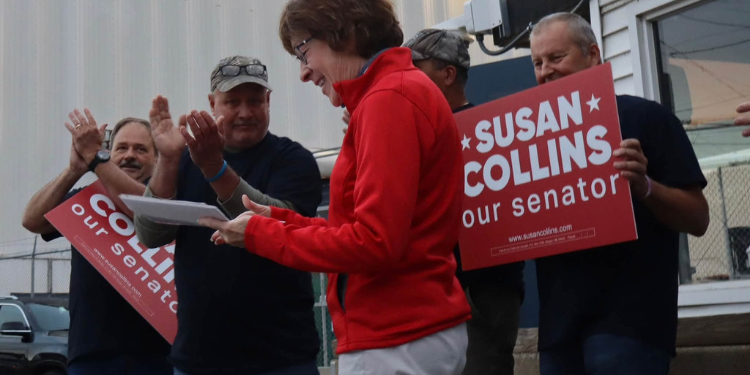
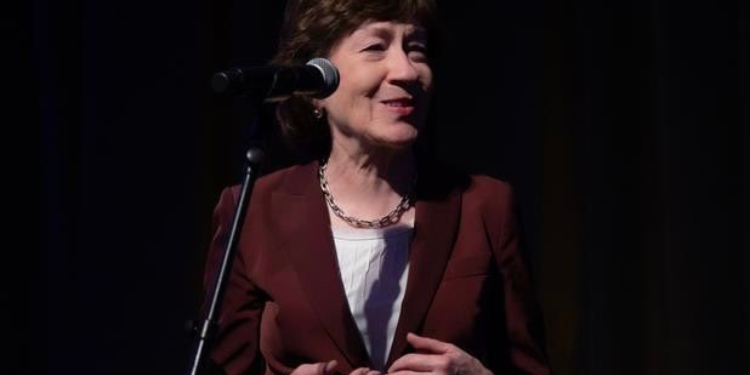
WASHINGTON — Sen. Susan Collins is rebutting a Democratic-supported ad campaign that ties her to Medicaid cuts and the loss of maternity services in Maine, saying she opposed the federal spending bill because of its effect on Medicaid and rural health care.
The dispute comes as Collins, a Republican, faces Democratic challenger Troy Jackson in Maine’s 2026 Senate race. WinSenate, a super PAC linked to Senate Majority PAC, launched a television and digital ad campaign on Monday portraying the two candidates as having sharply different records on health care.
The campaign is part of a $2 million advertising effort in Maine, according to The Hill.
The ad features Dr. Peter Millard, a Belfast physician, who says Medicaid cuts are forcing labor and delivery units to close and warns that some mothers could face drives of an hour or more to reach a hospital during an emergency.
The ad also says Collins cast the “deciding vote” to advance President Donald Trump’s One Big Beautiful Bill and accuses her of helping advance Medicaid cuts.
Collins Disputes the Characterization
In a statement posted to social media, Collins said she “did NOT vote to cut Medicaid” and said she voted against the legislation’s final passage because of its Medicaid provisions.
She also said she had warned that the proposed reductions could threaten health care for Mainers and put rural hospitals at greater risk.
Collins Voted to Advance Bill, Then Opposed Final Passage
June last year, Collins voted for a procedural motion to advance the One Big Beautiful Bill Act. She said at the time that the vote did not determine how she would vote on final passage and that she wanted additional changes to the legislation.
Collins subsequently voted for several amendments intended to protect Medicaid. When those efforts failed, she voted against the final bill.
PolitiFact examined a similar claim in June and rated it false, noting that Collins voted to advance the bill but ultimately opposed its passage because of the Medicaid reductions.
A September fact-check of the newer WinSenate advertisement rated the broader claim about Collins and the Medicaid cuts “Mostly False.”
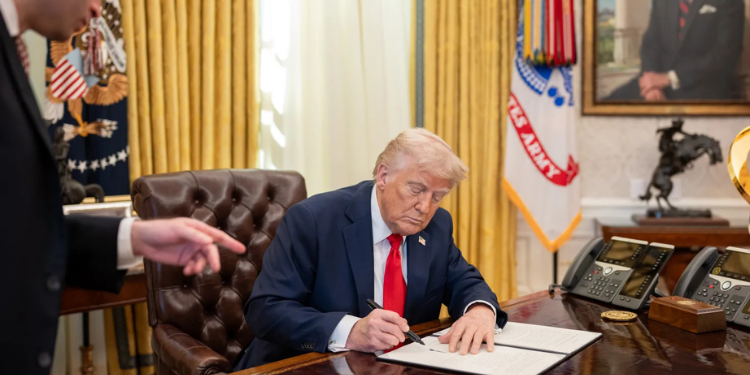
The bill later passed the Senate and Trump signed it into law.
Maine Maternity Care Turns Campaign Issue
The political dispute comes as Maine faces continuing pressure on its rural maternity-care system.
MaineHealth announced in August that it would transition inpatient labor and delivery services from Lincoln Hospital in Damariscotta to Mid Coast Hospital in Brunswick beginning Dec. 18.
MaineHealth cited low birth volumes and challenges staffing a 24-hour labor and delivery unit with specialized staff. The hospital said it hasn’t been able to recruit an OB-GYN since 2020 and had relied more on contracted providers.
MaineHealth has reported that 11 labor and delivery units closed across Maine between 2015 and the 2026 Lincoln Hospital decision. The Lincoln closure is expected to become the 12th.
Collins Points to Rural Health Funding
Collins argues that the maternity-care problems cannot be attributed solely to the federal legislation.
In her response to the advertisement, she said MaineHealth has cited low birth volumes and increasing difficulty recruiting specialized providers as longstanding problems. She also pointed to workforce, reimbursement and demographic pressures facing rural maternity care.
Collins highlighted the Rural Health Transformation Program, which she says she helped expand to $50 billion nationally.
She said Maine is receiving $190 million this year through the program for rural health care, hospitals, health care workers, technology and access to services.
She also pointed to her bipartisan Rural Obstetrics Readiness Act, which she said is intended to address provider shortages affecting rural maternity care.