WASHINGTON — House Republicans on the Energy and Commerce Committee introduced a 14-bill package Tuesday aimed at fighting health care fraud, strengthening Medicaid oversight and giving states more tools to protect taxpayer dollars.
The package, called “Continuing the Fight Against Fraud,” combines nine new bills with five measures lawmakers had previously introduced. The proposals focus on better data, stronger enforcement and new requirements for states and federal agencies overseeing Medicaid and other federally funded health programs.
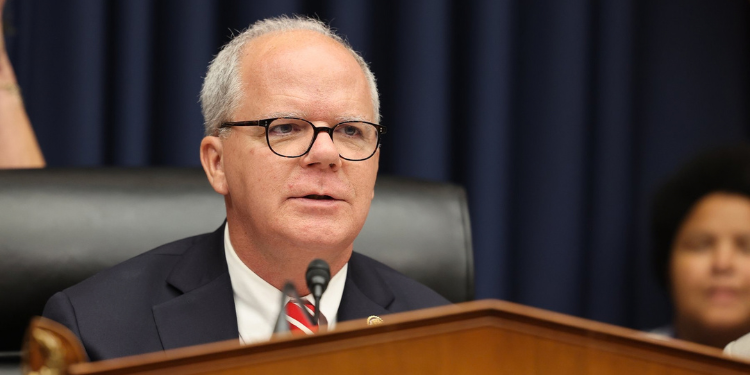
Committee Chairman Brett Guthrie, R-Ky., said the effort is intended to ensure money lost through fraud and improper payments remains available for Americans who rely on government health programs.
“Every dollar stolen by fraudsters or wasted on improper payments is a dollar taken away from supporting families in need who rely on these programs,” Guthrie said.
Republicans Push New Tools to Detect Fraud
A major part of the package would give states access to more technology and data to spot suspicious payments and providers.
The Strengthening Medicaid Analytics to Reduce Theft Act, sponsored by Rep. Troy Balderson, R-Ohio, would require the Department of Health and Human Services to make standardized data analytics technology available to every state.
Another measure, the Public Access to HHS Health Data Act, sponsored by Rep. Cliff Bentz, R-Ore., would require HHS to establish a centralized public repository for federal health data that could be used for oversight, research and program-integrity work.
The Medicaid Integrity Improvement Act, sponsored by Rep. John Joyce, R-Pa., would require Medicaid Fraud Control Units to conduct annual audits of high-risk providers.
Bill Would Give States More Incentive to Recover Fraud
The HELP STATES Act, sponsored by Rep. Tom Kean, R-N.J., would change how states benefit from recovering fraudulent Medicaid payments.
States generally must return the federal share of recovered Medicaid funds to the federal government. Kean’s bill would allow states to retain up to 25% of the federal share of Medicaid overpayment recoveries attributable to fraud.
The retained money would have to be reinvested in program-integrity activities, including audits, investigations, data analytics and information technology.
The package also includes the Medicaid Fraud Fighting and Taxpayer Protection Act, sponsored by Rep. Morgan Griffith (R-Va.). The bill would increase the additional share of federal Medicaid recoveries available to states with qualifying False Claims Act cases from 10 percentage points to 25 percentage points.
More Oversight of Medicaid Programs
Several bills would impose additional reporting and accountability requirements on states.
The Medicaid Integrity and Fiscal Accountability Act, sponsored by Rep. August Pfluger, R-Texas, would require each state to designate an individual responsible for Medicaid claims processing, payment integrity, financial reporting and internal controls.
The Medicaid Fraud Prevention Act would require states to conduct annual Medicaid fraud-risk assessments, develop corrective-action plans and report their findings to HHS and Congress.
The Medicaid RAC Improvement Act would strengthen federal oversight of state Recovery Audit Contractor programs by requiring more detailed reporting on audits, overpayments and recoveries and expanding audit requirements to Medicaid managed-care payments.
The package also includes the Medicaid Whistleblower Protection Act, which would require states to protect people who report Medicaid fraud, waste, or abuse.
Fraud Becomes Part of GOP Health Care Message
The package comes as Republicans increasingly emphasize fraud and improper payments in their health care messaging ahead of the 2026 midterm elections.
Republicans have argued that curbing fraud and waste can help protect taxpayer-funded health programs and control costs.
Democrats have criticized Republicans for including Medicaid cuts in the 2025 One Big Beautiful Bill Act and for not extending enhanced Affordable Care Act tax credits. Republicans have said the actions were necessary to address problems like fraud.
Package Could Face Lame-Duck Vote
The House has left Washington for a recess until after the November midterm elections, so the package could be considered during the lame-duck session after the elections.
The legislation would give states additional tools to identify fraud, recover improper payments and strengthen oversight of Medicaid programs if Congress takes it up.